Flake Cooking Tower and Steam Tower Systems - Atlas Yem
Flake Steam Tower
Atlas Yem | Feed Milling, Flaking & Recycling Technology
Flake Steam Tower All Products
Flake Cooking Systems and Flake Steam Tower
What is a flake cooking system?
A flake cooking system is the unit in which grains such as corn and barley are cooked with steam and heat before being flattened in the rollers. At the heart of this system is the flake cooking tower. The grain stays in contact with steam inside the tower for a set period, softening and becoming ready for flaking.
Atlas Yem flake cooking systems are designed to work in harmony with the other stages of the flake line. The product leaving the cooking tower is transferred directly to the flaking mills, where it is flattened to the desired thickness.
At which stage of production is the flake cooking system used?
In a flake production line, the cooking stage takes place in the following order:
- The grain is cleaned and fed into the production line.
- It is cooked with steam in the flake cooking tower.
- The cooked grain is flattened in the flaking mills.
- The resulting flakes are dried and cooled.
- The product is transferred to storage or packaging.
How does a flake cooking tower work?
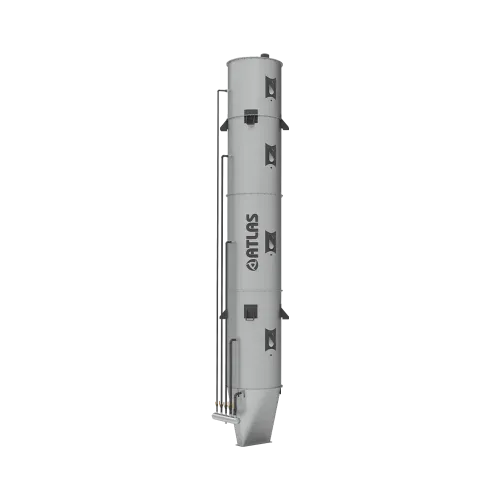
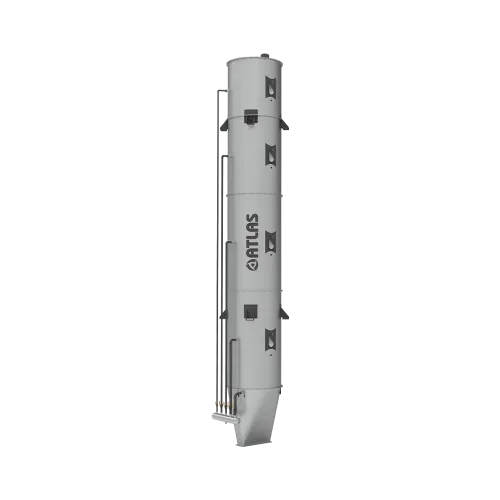
A flake cooking tower is a vertical silo fed with grain from the top. As the grain moves downward through the tower, it is heated by steam injection. Distributor blades inside the tower ensure the product moves evenly, while level sensors control how long the grain stays in the tower.
In Atlas Yem flake cooking tower models, grain is cooked with steam at 130-160 °C for 45-60 minutes. This time and temperature can be adjusted according to the type of flaked feed. The AISI 304 stainless steel body and high-density insulation reduce heat losses.
Which parameters are controlled in a flake cooking tower?
The following values are continuously monitored for high-quality cooking:
- Steam pressure and steam quantity
- Temperature inside the tower
- Retention time of the grain in the tower
- Inlet and outlet moisture of the product
- Product level inside the tower
Are a flake steam tower and a flake conditioning tower the same?
Yes. In the industry, the terms flake cooking tower, flake steam tower and flake conditioning tower are used for the same equipment. They all describe the vertical tower that softens and cooks grain with steam before flaking. So when planning a flake plant, these three terms refer to the same machine.
The flake steam tower, also known as the steam flaking machine, is the most critical thermal stage of the flake line. The more uniform the cooking in the steam tower, the more regular the flakes coming out of the rollers.
What are the advantages of steam cooking?
Cooking in a flake steam tower provides the following benefits:
- Starch gelatinisation increases digestibility.
- The grain softens and turns into flakes in the rollers without breaking.
- Harmful microorganisms are inactivated.
- The animal’s feed conversion rate improves.
- The ratio of dust and broken kernels decreases.
Why are grains steam-cooked before flaking?
When dry grain passes through the rollers, it breaks and creates dust instead of forming flakes. The steam treatment in the flake conditioning tower softens the kernel and makes it flexible. This allows the rollers to turn the grain into thin, wide flakes.
Cooking is also decisive for the nutritional value of flaked feed. Cooking at high temperature for a sufficient time breaks down starch granules, allowing animals to make better use of the energy in the grain.
What problems occur in grain flaked without cooking?
Insufficient cooking or no cooking at all leads to the following problems:
- High ratio of broken kernels and dust
- Irregular and thick flakes
- Low starch gelatinisation
- Reduced digestibility
- Excessive roller wear and energy consumption
How is flake cooking tower capacity selected?
The flake cooking tower is selected according to the hourly capacity of the flaking mill and the time the grain must remain in the tower. If the tower volume is insufficient, the grain leaves the tower before it is fully cooked. An oversized tower, on the other hand, creates unnecessary investment and energy costs.
For different production needs, Atlas Yem offers the APSS15 flake cooking tower with a volume of 15 m³ and the APSS25 with a volume of 25 m³. The APSS25 is designed for high-tonnage integrated flake plants operating continuously.
Which criteria are important in capacity selection?
The following points are evaluated to choose the right flake steam tower:
- Hourly capacity of the flaking mill
- Time the grain must remain in the tower
- Type of grain to be processed
- Steam boiler capacity
- Planned future capacity increases
Is the flake cooking time different for corn and barley?
Corn and barley differ in kernel hardness and moisture retention. Because corn has a harder structure, it usually requires a longer cooking time and more steam. Barley softens in a shorter time. For this reason, flake cooking systems should be designed to allow temperature and time adjustments according to the grain being processed.
What factors affect cooking settings?
The following are considered when determining cooking time and temperature:
- Grain type and kernel hardness
- Initial moisture of the grain
- Target flake thickness
- Animal group the ration is intended for
How can efficiency be increased in flake cooking systems?
Flake cooking systems are among the sections with the highest energy consumption in a flake plant. A well-insulated cooking tower reduces steam losses and lowers operating costs. Steam valves integrated with PLC and SCADA systems continuously monitor temperature and moisture values, ensuring every batch is cooked to the same standard.
Drying the product correctly after the cooking tower is also part of efficiency. For this stage, Atlas Yem flake drying systems are planned with capacities matching the cooking tower.
What can be done to save energy in the cooking tower?
The following practices stand out for reducing energy consumption:
- Proper insulation of the tower body
- Preventing leaks in the steam line
- Adjusting steam quantity to demand through automation
- Matching tower capacity with roller capacity
- Regular maintenance and sensor calibration
2 from the product 1–2 Showing between