Coût d’une usine d’aliments clés en main 2026 - Atlas Yem
Actualités
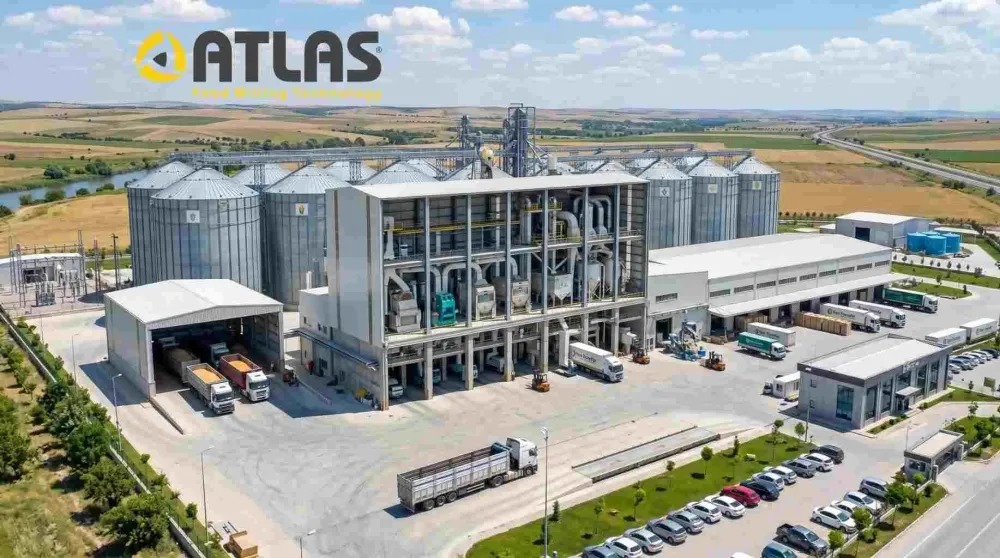
Turnkey Feed Mill Construction Cost
Coût d’installation d’une usine d’aliments clés en main
Combien coûte l’installation d’une usine d’aliments ?
Le coût d’installation d’une usine d’aliments clés en main varie généralement entre 500 000 USD et 5 000 000 USD selon la capacité, le choix des équipements et les conditions d’infrastructure. Les petites unités (5 à 10 tonnes/heure) se situent dans la fourchette basse, tandis que les capacités industrielles se situent dans la fourchette haute. Le coût d’une usine d’aliments ne peut donc être calculé avec précision qu’une fois la capacité visée et le modèle de production définis.
Why Is Feed Mill Cost Planning So Critical?
L’investissement dans une usine d’aliments est l’une des décisions les plus critiques du secteur de l’élevage. Une installation d’usine d’aliments réalisée sans planification adéquate peut augmenter à la fois les coûts initiaux et les dépenses d’exploitation à long terme. Chez Atlas Yem, nous analysons depuis 2002 les données de mise en service de centaines d’usines et modélisons chaque projet avec une structure de coûts réaliste.
A feed mill is not just a collection of machines — it is a synchronized production ecosystem. Therefore, cost estimation must be approached with a holistic engineering perspective.
What Factors Determine the Cost of a Turnkey Feed Mill?
Production Capacity
Hourly production capacity (tons/hour) is the primary driver of total investment. The difference in equipment and infrastructure costs between a 5 t/h plant and a 50 t/h plant is significant.
- 5–10 t/h: Small to medium-scale production facilities
- 10–30 t/h: Industrial livestock operations
- 30–50+ t/h: Large-scale integrated feed factories
Equipment Groups and Technology Selection
Pelletizing systems, hammer mills, mixing machines, dosing units, and packaging lines represent the main cost items. Energy-efficient motor drives and PLC/SCADA automation may require higher upfront investment but reduce energy costs by up to 20% over time.
- Pelletizing and conditioning unit
- Hammer mill and vibrating sieve
- Twin-shaft mixer
- Automatic dosing and weighing systems
- Elevator, conveyor, and silo equipment
- Packaging and labeling lines
Civil Construction and Infrastructure
Site preparation, building construction, electrical infrastructure, and gas connections can account for 25–40% of total project cost. This proportion varies significantly based on location and existing site conditions.
Raw Material Storage Capacity
Silo sizing must match the facility's raw material procurement cycle. Insufficient storage leads to production downtime and material losses — directly increasing total cost of ownership (TCO).
|
💬 Forum Tartışması "Yem fabrikası kurmak istiyorum ama bütçem kısıtlı. Sıfırdan mı başlamalıyım, yoksa mevcut tesis mi satın almalıyım?" — Çiftçi Forumu |
💬 Forum Discussion "I want to build a feed mill but my budget is limited. Should I build from scratch or acquire an existing plant?" — Livestock Forum |
Both options have merits. A purpose-built facility starts with modern technology and optimal efficiency, but requires a longer setup timeline. Acquiring an existing plant may offer a lower entry cost, but aging equipment often leads to higher maintenance expenses and energy consumption, which offset initial savings.
Cost Component Breakdown: Turnkey Feed Mill
|
Cost Item |
% of Total |
Description |
|
Machinery & Equipment |
45–55% |
Pelletizing, grinding, mixing, and packaging systems |
|
Civil Construction |
25–35% |
Building, electrical, gas, and foundation works |
|
Automation (PLC/SCADA) |
5–10% |
Control systems, software, sensors |
|
Silos & Storage |
5–10% |
Raw material and finished product storage |
|
Commissioning & Training |
3–5% |
Site setup, testing, staff training |
What Does Atlas Yem Deliver in a Turnkey Project?
Since 2002, Atlas Yem has been managing every phase of turnkey feed mill projects — from raw material intake to final packaging — under one roof. Our ISO 9001:2015-certified production infrastructure subjects every machine to load tests that simulate real-world field conditions.
- Project-based feasibility and ROI analysis
- Engineering consultancy for capacity and technology selection
- On-site commissioning and performance verification
- 20+ years of maintenance and spare parts support
- Energy efficiency optimization (up to 20% savings)
How Long Does Feed Mill ROI Take?
The payback period depends on production capacity, energy efficiency, and product sale prices — typically ranging from 3 to 7 years. Atlas Yem projects, supported by total cost of ownership (TCO) analysis, target payback periods below the industry average. Correct equipment selection and energy-saving measures can shorten this window by 1–2 years.
Small-Scale vs. Large-Scale Feed Mill: A Comparison
|
Criterion |
Small Scale (5–10 t/h) |
Large Scale (30+ t/h) |
|
Investment Cost |
USD 500K–1.5M |
USD 2.5M–5M+ |
|
Payback Period |
4–7 years |
3–5 years |
|
Energy Efficiency |
Moderate |
High (automation advantage) |
|
Flexibility |
High |
Moderate (product variety limited) |
|
Annual Maintenance |
Low |
Planned maintenance required |
Frequently Asked Questions
What does a turnkey feed mill mean?
A turnkey feed mill is an integrated solution where a single supplier manages all phases — from project design and machine supply to installation, commissioning, and staff training. Atlas Yem has delivered this comprehensive model from Konya to global markets since 2002.
How long does a feed mill installation take?
Depending on project scale, small facilities can be completed in 4–6 months, while industrial-scale projects may take 8–18 months. This timeline covers feasibility analysis, equipment manufacturing, transportation, installation, and commissioning.
What feed types can be produced in the plant?
Facilities can be configured for cattle (beef, dairy), poultry (broiler, turkey, quail), and pet food (cat, dog) production at varying capacities and process configurations. Atlas Yem designs customized production lines that meet the specific nutritional requirements of each animal category.
How can energy costs be optimized?
Variable frequency drives, optimized mechanical power transmission designs, and PLC-based automatic load management systems can reduce energy consumption by up to 20%. Atlas Yem projects include energy consumption reporting as a standard deliverable during commissioning.
Why does the total cost of ownership (TCO) matter?
Purchase price alone is not a sufficient criterion. Maintenance, spare parts, energy consumption, and unplanned downtime costs over the machine's lifespan can multiply the initial investment. Atlas Yem provides TCO modeling during the project design phase, giving investors a realistic financial picture.
If you enjoyed our content "Turnkey Feed Mill Construction Cost" please visit our News page.
For more information, please contact us.