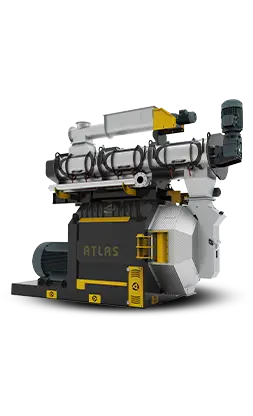
How Are Barley Flakes Made? Barley Flaking Machine
News

How Are Barley Flakes Made?
Barley flakes are produced by conditioning barley with steam and heat and then crushing it between rollers into flake form. This process allows barley to be used in feed production in a different physical form. The capacity of the equipment used in barley flake production, the steam application and the roller settings can all affect the properties of the final product. Modern feed production plants in particular use systems specifically designed for processing barley.
How Are Barley Flakes Produced?
In the first stage of barley flake production, the barley is cleaned and fed into the production line. It is then softened through a controlled steam and heat treatment. The conditioned barley is passed between rollers, crushed and turned into flakes. The barley flaking machine used in this process is one of the key pieces of equipment on the production line.
What Are the Stages of Barley Flake Production?
In barley flake production, it is important that every stage is carried out under control. The process, from preparing the product to flaking it, is planned according to the capacity of the equipment and the production targets.
- The barley is cleaned.
- The product is fed into the production line.
- It is conditioned with steam and heat.
- The barley is crushed between rollers.
- The product is formed into flakes.
- The product is cooled and stored under suitable conditions.
How Does a Barley Flaking Machine Work?
A barley flaking machine crushes conditioned barley between rollers to form flakes. Feeding the barley into the system, passing it between the rollers and transferring the resulting product to the line are carried out according to the machine's design. When choosing a barley flaking machine, the production capacity and the overall production structure of the plant should be taken into account.
What Should You Consider When Choosing a Barley Flaking Machine?
When choosing a barley flaking machine, capacity should not be the only consideration. The amount of barley to be processed, the capacity of the production line, the characteristics of the rollers and the plant's other equipment should all be evaluated together.
- Production capacity
- Roller dimensions and design
- Compatibility with the steam system
- Product inlet and outlet capacity
- Energy requirements
- Integration with the feed production line
- Automation infrastructure
How Is Flaked Barley Obtained?
Flaked barley is obtained by first conditioning barley with steam and heat and then crushing it between rollers. During this process, the grain structure of the barley is changed to create a thinner, flake-shaped product. The resulting flaked barley can be used as a raw material in feed production.
Why Is Steam Used in Flaked Barley Production?
Steam plays an important role in the conditioning stage. Controlled steam application aims to make the barley suitable for processing in the rollers. The amount of steam and the conditioning time are determined according to the design of the production line and the properties of the product to be processed.
- It helps soften the barley.
- It makes processing in the rollers easier.
- It helps bring the product to the desired physical form.
- It helps the production process run under control.
What Is Flaked Feed?
Flaked feed is a processed feed raw material obtained by crushing grains between rollers after steam and heat treatment. Barley flakes are one of the products prepared using this method. Grains such as corn and barley can be used in flaked feed production, and the resulting product can be included in different feed rations.
How Is Barley Used in Flaked Feed Production?
Before flaking, barley is cleaned and transferred to the production line under suitable conditions. It is then conditioned with steam and heat and crushed in the rollers. The resulting product is then ready to be used in flaked feed production.
The properties of the barley used in flaked feed production and the operating conditions of the production line can affect the physical structure of the final product.
What Does a Flaking Machine Do?
A flaking machine crushes grains between rollers into flake form after they have been conditioned with steam and heat. The capacity of the machine used in barley flake production should match the plant's production targets. A flaking machine with the right capacity can work in harmony with the other equipment on the production line.
Which Grains Can Be Processed in a Flaking Machine?
Depending on its design and the production line, a flaking machine can be used to process different grains. Barley and corn are among the grains most commonly used in flake production.
- Barley
- Corn
- Other grains suitable for processing
How Is a Flaking Plant Set Up?
A flaking plant is a production system that brings together the equipment used to condition grains, crush them and turn them into flakes. A flaking plant does not consist of a single machine. Different stages such as raw material preparation, steam application, flaking, conveying, cooling and storage can be included in the plant design.
What Equipment Does a Flaking Plant Include?
The equipment of a flaking plant can vary depending on the production capacity and the product to be processed. A plant set up for barley flake production can generally include the following systems:
- Raw material intake system
- Cleaning equipment
- Steaming and conditioning system
- Barley flaking machine
- Conveying systems
- Cooling equipment
- Storage units
- Automation system
How Is a Flake Line Integrated During Feed Mill Setup?
If flakes are to be produced, the flake line must be planned to work in harmony with the other production stages during feed mill setup. How the product obtained from barley flake production will be transferred to stages such as mixing, pelleting or storage can be determined in advance.
As part of feed mill setup, Atlas Yem evaluates the different production stages as a whole and develops solutions in feed technologies. Planning the flake line according to production capacity helps ensure a smooth product flow within the plant.
Where Is the Flake Line Positioned in a Feed Mill?
The position of the flake line is determined by the plant's overall production flow. The distance and conveying system from raw material intake to flake production, and then to the production stage where the product will be used, are taken into account.
- Raw material intake point
- Barley storage area
- Steam and conditioning section
- Flaking machine
- Cooling system
- Conveying line
- Finished or intermediate product storage area
How Is Quality Ensured in Barley Flake Production?
The quality of barley flakes can be affected by many factors, such as the properties of the barley, conditioning conditions, steam application, roller settings and the operating pattern of the production line. For this reason, it is important to select the barley flaking machine and other equipment according to production capacity.
What Should Be Considered in Barley Flake Production?
Keeping process conditions under control during production helps the final flake product come close to the desired properties.
- The cleanliness of the barley should be checked.
- Steam should be applied in a controlled manner.
- The conditioning time should be set appropriately.
- Roller settings should be checked.
- A flaking machine suited to the production capacity should be used.
- The product should be cooled properly after production.
Why Is Barley Flake Production Used in Feed Mills?
Barley flake production allows barley to be used as a processed raw material in feed production. Barley used in flaked feed production is treated with steam and heat, crushed in the rollers and turned into flakes. For this reason, flaking technology can play an important role in the production processes of feed mills that need grain processing.
With its experience in feed mill setup and flaking technologies, Atlas Yem develops production solutions for processing barley and similar grains. An efficient flake production line can be created by planning the barley flaking machine, steaming, conveying and other equipment according to production capacity.