What Are the Types of Shaking Sieves? - Atlasyem
News
What Are the Types of Shaking Sieves?
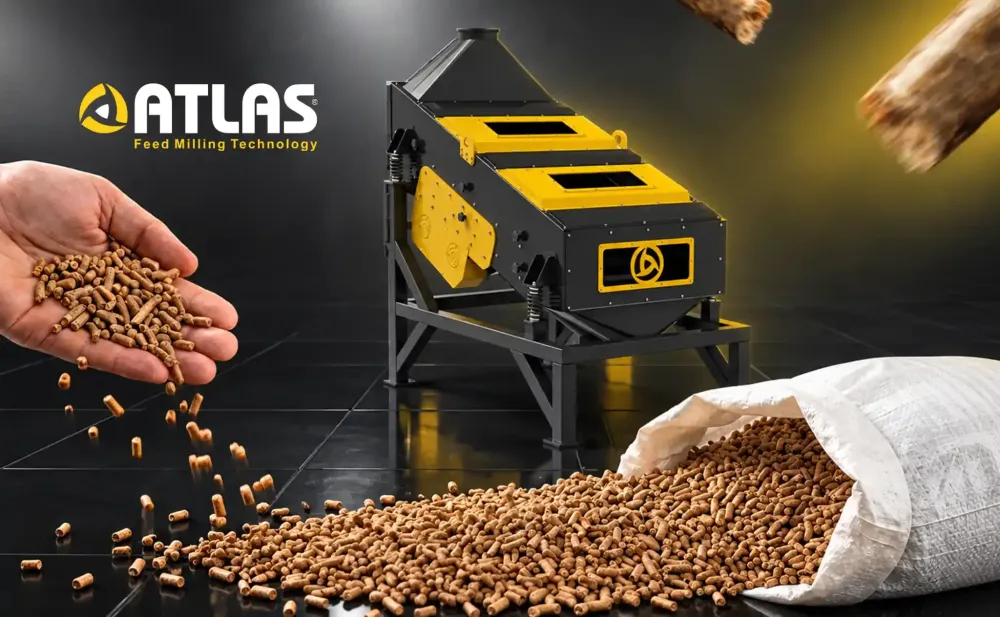
A Shaking Sieve is an important piece of equipment used to classify products with different particle sizes and separate unwanted particles. Particularly within Feed Technologies, it contributes to a more organized and controlled production process. Different models can be preferred depending on the application, capacity, and sieve design.
The feed machinery used in feed production plants performs various functions, from processing raw materials to preparing the final product. Within this system, proper screening is important for maintaining production quality.
Shaking Sieve types generally vary according to the following characteristics:
-
Screening capacity
-
Screen surface dimensions
-
Number of decks
-
Screen opening size
-
Characteristics of the product to be processed
-
Production line capacity
Where Are Shaking Sieves Used?
A Shaking Sieve is used in production processes where particles of different sizes need to be separated. It plays an important role particularly in feed mills, where raw materials and processed products need to be classified according to particle size.
Screening systems used as part of feed machinery help separate particles of different sizes during the processing of raw materials such as corn, wheat, barley, and similar agricultural products. This helps prevent unwanted particles from moving on to the next stage of the production line.
Common application areas include:
-
Feed mills
-
Grain processing plants
-
Flour mills and milling facilities
-
Legume processing plants
-
Agricultural product classification
-
Various industrial screening applications
Vibrating screen systems, which operate through vibration, similarly enable products to be separated according to particle size. However, when selecting a system, the characteristics of the product to be processed and the production capacity of the facility should always be taken into consideration.
What Should Be Considered When Choosing a Shaking Sieve?
When selecting a Shaking Sieve, considering only the machine's capacity is not sufficient. The entire production line should be evaluated to determine the most suitable equipment. An incorrectly selected sieve can reduce screening performance and lead to efficiency losses in the production process.
The following criteria should be considered during selection:
-
Production capacity
-
Type of raw material to be processed
-
Required screening precision
-
Screen opening sizes
-
Motor power
-
Compatibility with existing equipment in the facility
-
Ease of maintenance and cleaning
For systems designed to operate together with feed machinery, compatibility between different pieces of equipment is particularly important. If the screening capacity is lower than the capacity of the production line, the overall performance of the system may be negatively affected.
With ongoing developments in feed technologies, more controlled and efficient screening systems are increasingly being used. Therefore, when selecting new equipment, not only current requirements but also the facility's future production capacity should be taken into account.
How Can Efficiency Be Increased When Using a Shaking Sieve?
To achieve high efficiency when using a Shaking Sieve, the machine should be operated at the appropriate capacity and maintained regularly. Keeping the screen surfaces clean helps ensure a consistent flow of material.
To improve efficiency:
-
Screen surfaces should be inspected regularly.
-
Screen openings should be checked for blockages.
-
The motor and vibration system should be inspected regularly.
-
The machine should not be loaded beyond its production capacity.
-
Screen opening sizes should be selected according to the product being processed.
-
Worn components should be replaced in a timely manner.
In vibrating screen systems, monitoring vibration levels and operating conditions is also important for screening performance. Regular maintenance and proper operation help extend the service life of the equipment and maintain continuity in production.
Choosing the right equipment and adopting a professional production approach can help make screening processes in feed production facilities more efficient. Atlas Yem, with its solutions in the field of feed technologies, can contribute to the proper evaluation and selection of equipment required throughout production processes.